
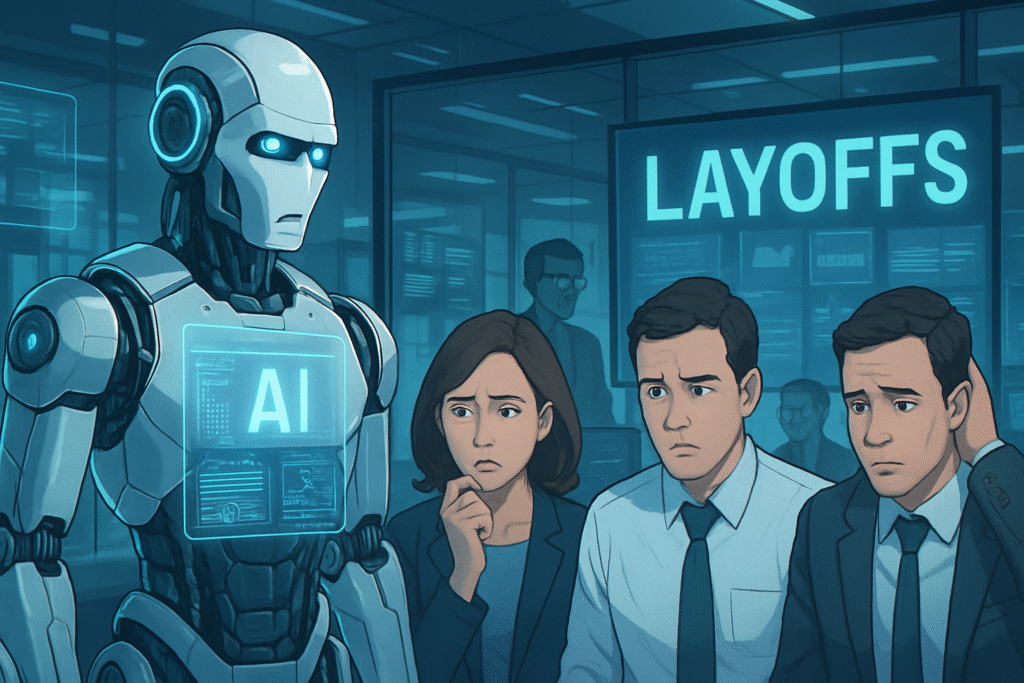
How AI is Driving Layoffs in the IT Sector — And Where IT Talent Should Focus Next
The ascent of artificial intelligence is reshaping the global IT sector — and India’s longtime tech services powerhouse is far from immune. As AI automates many routine and repetitive tasks, we’re witnessing undeniable job losses, particularly in roles centered around low-level coding, manual testing, and documentation. Recent layoffs at major firms, including Tata Consultancy Services (TCS), Infosys, Wipro, and HCLTech, are clear signals that change is here, and IT professionals must respond proactively.
What’s Fueling Layoffs? Not Just AI (Yet)
TCS recently announced plans to let go of 12,000 employees (about 2% of its workforce), with similar reductions at Infosys and Wipro over the past two years. While TCS maintains these cuts are driven by “skill mismatch” and the need to realign talent with present business demands — not just AI efficiency — the underlying reality is that foundational IT jobs are rapidly becoming obsolete. Tasks like basic coding, testing, and documentation are easily automated, and AI-powered platforms are swiftly rendering them unnecessary.
The Pyramid Model: Outdated in the Age of AI
For decades, Indian IT companies have scaled using a “pyramid” delivery model: large ranks of junior, entry-level programmers at the base, with smaller layers of more experienced engineers and management above. Former Tech Mahindra CEO CP Gurnani recently commented on this era with a famous line from the Bollywood film “Sholay,” signaling that the headcount-obsessed days are “over.” Gurnani urges the industry to prioritize “enhanced productivity, specialised skills, and advanced technological capabilities” — suggesting a decisive shift to “outcome-based” delivery and away from body-shopping.
Former Nasscom chairman Ganesh Natarajan characterizes the pyramid model as “Jurassic Park material,” and notes that the rise of agentic AI (systems that autonomously orchestrate complex business tasks) will force companies to rethink both team structures and delivery models. Layoffs aren’t just driven by automation — market shifts and vendor consolidation play a part — but the result is the same: the most vulnerable jobs are at the bottom.
Where New IT Jobs Will Emerge
While AI will certainly take away many old roles, it will also create new and richer opportunities for those willing to adapt:
- AI Integration and Customization: Demand is rising for experts who can implement, fine-tune, and govern AI models for specific business needs.
- AI Ethics, Risk, and Compliance: As automation expands, so does the need for professionals who ensure AI systems are fair, transparent, and legally compliant.
- Cybersecurity & Data Privacy: The more organizations lean on AI, the more critical data stewardship and intelligence-driven security become.
- Human-AI Collaboration Design: Specialists will be needed to create seamless workflows where humans and AI collaborate productively.
- Complex Solution Architecture: With IT projects growing more abstract and AI-powered, solution architects and product managers will be at the forefront.
Future-Focus: Where IT Professionals Should Invest
To remain relevant, current and aspiring IT professionals should:
- Upskill in Advanced Technologies: Master AI, machine learning, cloud, data science, and cybersecurity.
- Develop Domain Expertise: Understand business verticals deeply to offer specialized solutions.
- Strengthen Soft Skills: Natural language communication, collaboration, and creativity will become even more prized.
- Embrace Lifelong Learning: The only constant is change — continuous reskilling is now a career imperative.
CP Gurnani’s Message: Adapt, Don’t Resist
Gurnani’s counsel is clear: the era when sheer headcount translated to IT success is finished. Companies and professionals alike must “move beyond the obsession of headcount” and focus on outcomes — on delivering specialized value that can’t be replaced by an algorithm. His advice resonates especially for techies facing uncertainty today: adapt, upskill, and embrace the future.
In summary: The rise of AI is accelerating layoffs in IT, but it’s also giving birth to a new ecosystem of tech jobs centered on creativity, domain expertise, and multidisciplinary collaboration. Those who pivot quickly, invest in next-generation skills, and adopt a growth mindset will not just survive but thrive in this transforming landscape.